10 Compliments We Women Never Tire of Hearing


10 Compliments We Women Never Tire of Hearing

1.   I love your Jimmy Choo shoes.

(Payless actually, but thanks.)

2.   You’ve lost weight.

(My winter clothes work wonders.)

3.   You’re a culinary master.

(I call my technique take out.)

4.   You’re a natural beauty.

(Thanks. It took me an hour to perfect this look.)

5.   Are you a dancer?

(My best move is tripping up the stairs.)

6.   I could listen to you talk for hours.

(Good, because I have a litany of items to discuss.)

7.   You’re so witty.

(Ugh, the pressure!)

8.   You look so Italian?

(Grazie mille!)

9.   Your mind is a thing of beauty.

(It is, isn’t it?)

10.               You were right.

(Told you so)

Image

Dear Santa, I can explain everything.

Oops, wait, you guys weren’t meant to see that.:)  I do hope you will take moment to read what follows.

Christmas, either the lightest of light or, heaviest of dark..for all those with weeping souls and wounded spirits..my heart is with you.

May the spirit of Christmas find us.

Let it be a balm of comfort and peace,

a vessel for love and giving,.

a beacon of hope and renewal.

May it reside in our hearts eternally.

Image

 Merry Christmas!

Not Just a Girl.

 
Inside she is sunshine.

An innocent girl.

Full of dreams.

Her whole life ahead of her.

The world at her feet.

Out on the street

In the late summer heat.

Men with wicked schemes.

She meets

They have her in their reach.

Sadness and horror they teach.

Selling her to the highest bidder.

Money they will keep.

Binding her in chains.

A sex slave they seek.

Breaking her spirit.

Crushing her soul.

Taking her humanity.

All for gold.

Inside she is broken.

A heart that just a shell.

Her body void and empty.

Her life a living hell.

The terror gets worse.

Fear it grows.

Brutality all she knows

Can anyone hear her?

 
Image

She is only 12 years old


Join in the fight against Modern Day Slavery. You can make a difference.  
 

Ode to My Cat.

The silliest of silliest..

Not Quite-The Cat in The Hat….

My cat can rock, My cat can roll.

He knows how to keep with the beat.

Dancing around in the streets.

My cat can recite Shakespeare with ease

You see, he’s fluent in  CATionese

My cat is king of all he surveys.

Mostly, he’s surveys his food bowl.

My cat  is an expert at snoozing.

Who knows.. perhaps,  he’s been boozing.

My cat is the greatest of muses.

Poets and writers he inspires.

My cat is cool…the coolest of the cool.

He’ll snort his nip. And not give a …sh…..amen

My cat is a saint and a sinner.

His whole world revolves around dinner.

My cat is a superior

Just look at his posterior.

My cat is the greatest.

And now it been stated.

My cat will never be overrated.

Image

This nonsense brought to you by-Crazy Cats Ladies Everywhere and Yours Truly.

Happy Holidays!! May your turkeys and stockings be stuffed. The love and wine ever flowing. and may Santa find you being naughty and nice. xo

The Art of the Matter.

Is there a proper focus for understanding, and evaluating, the arts? Which is more important, the characteristics of the artist, as Tolstoy would have us believe, the actual work of art itself, or is it how the audience appreciates the art work?  We might argue that art is about all three of these potential interpretations and that each plays a fundamental role in what makes art, art.

If we were just to look at the artist and his, or her, perceptions we would have to consider that there were different elements up for debate; the first one being the intention of the artist, and what they were trying to convey through their art. Our concerns arise here when the audience interpretation of the artist’s work is different from what the artist was actually trying to say. Does this invalidate the work? We could argue that it does not, and that most critics would say that as long as the audience gets something out of art, then it has not been created in vain. However, this begs the question of should we even consider the artist’s intentions? Further, if we then discover new facts about the artist, should they alter our perception of the artist’s work? For instance, the author of Harry Potter, J. K. Rowling, has said that in her mind one of her characters if gay.  If one now goes back to re-read Harry Potter but still does not identify the gayness of the character, should we then just accept the artist’s views? Or, is it reasonable for us to assert that we do not perceive the character as gay? We would contend that is reasonable to assert that we do not perceive it. Art is subjective, and we believe that it is within the subjectivity of such aesthetic works, and the illusions that are conjured up in art’s mysteries, that hold the enchanting beauty of its magic. The fact that two people can perceive something entirely different from the same piece of work is, arguably, a dimension that demonstrates a free will that encourages us to, somewhat obliquely, consider the Robert Frost poem The Road Less Traveled: and how taking the road less traveled makes ‘all the difference’ to our journey.

 Another dimension of art that is up for debate is the social content, and what role it should play in art.  Some would argue that knowing the meaning, and the message, that the artist is trying to convey with their work is the crucial element of understanding the work. Some would contend that it is this dimension of art that gives the work its vitality and soul. Others would assert that the social content should not be the focus, but the art work itself. 

Some would offer that it should not be about the artist but the art work and that, social content, and therefore, arguably, cultural values, are not an important factor. However, the acknowledgment, appreciation, and awareness of social content in art, we would argue, can enhance an aesthetic work and, possibly, take us to a deeper level of understanding: recognizing the humanity in art is vital to understanding the humanity in ourselves.

Margaret MacDonald, an artist herself, had a lot to say about art.  She felt that to fully appreciate art one had to become an active participant in the art itself. She felt that to just merely look at a piece of art and pick out a good, or bad, feature was to miss the bigger picture. She argued that it is not, simply, enough to just pick out what we like, and do not like, about a piece of art, and that to do this  limits us: the limit is manifested in that we will, eventually, in probability, run out of things to say about the particular piece of art work. 

MacDonald writes that there is always more to say about art, because art is always evolving and changing. The meaning of art shifts through time because the interpreter changes.  A piece of art can mean different things to different people at different times in history because the appreciator also experiences change and evolves. That is to say that someone who is reading Hamlet today, perchance, may not interpret it the same way as someone reading Hamlet during Shakespearean times. Or that the Mona Lisa smile does not change, but over time our interpretation of her smile can change: the De Vinci code drifts JL. According to MacDonald, the best way to enjoy art, and feel art, is for the interpreter to put a part of himself, or herself, in the art.

Critics of MacDonald would be quick to point out that she puts too much emphasis on the interpreter and not enough on the art itself and that it, arguably, cannot be the case that whatever one believes about a work of art makes it a truth.  Which is more important then, the tension between the interpreter and the art or the artist intention? Why does either one have to be prioritized as more significant than the other, or more important? Why can art not be a collaboration of both the artist and the appreciator? After all is it not an aesthetic impulse to interpret art after we perceive it?  All dimensions of interpretation, we would offer, seem equally important. Art for art’s sake is a nice concept, but art should be shared and appreciated by all of humanity.

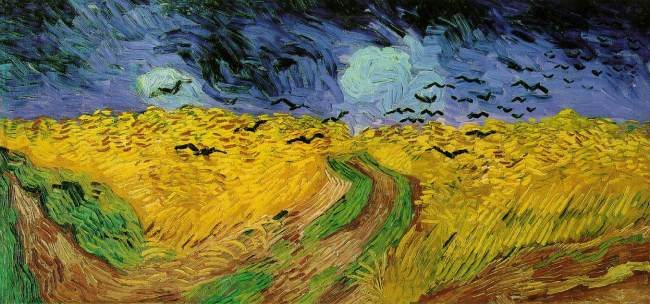
Tolstoy wrote that ‘Art is a human activity which has as its purpose the transmission to others of the highest and best feelings to which men have risen. Nietzsche argued, in The Birth of Tragedy, that art was the only justification for life. Perhaps if we, subtlety, bring the perceptions of these great writers together, for a moment, we can see that art is a shadow dancing within in a silhouette in search of the possibility of a harmony for humankind.
Image

This is not a review…this is atonement

“The path to paradise begins in hell.” ― Dante Alighieri

Disclaimer –I went into the Gabriel’s Inferno trilogy with a few preconceived notions. The main one being “this started out of Twilight fan fiction, it’s sure to be lacking in depth and substance.” I should have known better. My grandmother always taught me: never judge a book by its fan fiction roots.

But I digress. I decided to give the novels a read because I was intrigued to see how the author integrated Dante’s The Divine Comedy into his work. Turns out he did so masterfully. But I just was not ready to admit that the story got to me. I even wrote a somewhat disparaging review of Gabriel’s Inferno on my blog. I never write negative reviews, which is telling.

As an aside, in effort to find my way out of reviewer’s limbo, that blog is now gone with the proverbial wind.

I thought I was fighting the good literary fight. But in truth, I was only waging war with my stubborn bookish self. Now after having read books two and three, I have to be honest. This trilogy charmed its way into my heart, breaking down all my preconceived notions. I’m crazy for this series and having a serious case of reviewer remorse. I must atone to the Literary Gods and set things right as I strive to find my way to The Mount of Joy.

Ok. Here goes. I was wrong! People, this doesn’t happen often; unless you consider often a heck of a lot. I misjudged Sylvain Reynard. The man, whoever he may be, is a master storyteller. His deft use language, his passion for literature and the arts come alive on the pages. His characterization of Gabriel and Julianne, the empathy he feels for them, is achingly beautiful. Not only did they come alive on the page. so did Dante and Beatrice. He masterfully wove one of the greatest literary works of the Western World into a modern day tale. He crafted a story that kept this cynic coming back for more. The story of the professor and Julianne is chock full of tasteful eroticism, purpose and intensity; a story of romantic love- but also love itself, its power, its limitations, and its consequences. The themes of forgiveness and redemption should strike a chord with us all.

I grew to love Gabriel and Julianne and all their quirks and fragility. At first I despised them, especially Julianne. I found her too docile, her wild eye innocence grated. There were times when I wanted to shake her. In truth her character hit very close to home — too close. I remember being the naive waif scared of my own shadow. However, I should have known that just like I blossomed and came into my own, so too would Julianne.

Sylvain Reynard, how could I have ever doubted you? Your style is dazzling. Your literary voice is haunting. You have created an original love story that will not soon be forgotten. Which brings us to the final installment of the series, Gabriel’s Redemption.

Gabriel’s Redemption is by far my favorite of the three novels. I didn’t want it to end. I’m truly going to miss these characters. In the final installment, we find our beloved hero and heroine settling into wedded bliss. However, as Shakespeare will attest: “the course of true love never runs smooth”. This is certainly the case with  Gabriel and Julia. Their course is littered with ghosts from the past, jumping out and shouting “boo” at every corner. Then there are those pesky demons that reside in the mind, tempting and tormenting. On top of that, they have those normal issues that newlyweds must go through: learning to cohabit with another human being, debating if and when to start a family, etc.

Can Gabriel and Julianne put to rest the ghost from Christmas past? Will Satan get thee behind? Will a baby make three? Is museum’s sex all it’s cracked up to be? Does true love really conquer all? You’ll just have to read and find out.

_____________________________________-

“She was so Southern that she cried tears that came straight from the Mississippi, and she always smelled faintly of cottonwood and peaches.”
― Sarah Addison Allen, Garden Spells


Attention all Writers and Bibliophiles

Uh huh, yes, I’m talking to you, OK, well, not talking, but,you know.what I mean.  In addition to Chit Chat Chicks Live which if you haven’t checked out, you really should. (we bring you laughter, snark and some pretty amazing guests)…I’ve started a new podcast with my dear friend James Dennard   If you enjoy books, are handy with a pen and paper, then La Literati might be the show for you. This is our way of giving back to all our writers friends, who’s words inspire and transform us. Folks like you.  We’d appreciate it, if you would like our Facebook page. We’re so needy! We’re booking poets and authors now. Feel free, to get in touch. Please, see, links after description and a little info on James and myself.

Show Description

La Literati is a monthly show about poetry, books and the authors who inspire. We strive to bring you in depth interviews that illuminate. Every conversation is a story. We hope through our show, the listeners will develop a greater appreciation for writing, reading and those addicting things called book.

Join hosts, Tosha Michelle and Jim aka Niles, the constant readers, as they take you on a literary journey of discovery, wonder and the fine art of reading- a Bibliophilia dream.

Don’t forget the coffee and chocolate. We’ll provide the Southern hospitality and entertainment.

The Hosts

Tosha Michelle- a reformed Southern Belle, who lives to write, thrives on creativity, earning degrees and majoring in snark. A lifelong devotee of Godiva chocolates, so hide your sweets. A human rights advocate and lover of all things feline and girly

Jim-Teacher. Writer. Book Lover. True Southern Gent. David Hyde Pierce’s Doppelganger (at least according to his pal, Tosha Michelle)

Image

https://www.facebook.com/carpelibrumblogtalkradio

http://www.blogtalkradio.com/carpelibrum

and if you dig chicks..check us out here.

http://www.blogtalkradio.com/chitchatchickslive

and here

https://www.facebook.com/chitchatchicks

Sweet Tea Musings

In every life there’s always a moment

Where we lose ourselves

And the gray takes over.

Colorized in shades of black and blue
there are times

Where all we see is a haze of yellow
and we find ourselves
Basking in the warmth of assurance.

A mirage of transcendental tones,
Self and not self

Doership and discipleship
we wrestle with reality and myth.
Creating distinctions in the labyrinth of our minds,
Painting on a canvas

Of the ridiculous and sublime
Ruminating upon

Thoughts of power,

Fate and choice
Salted, peppered, and sprinkled,

With philosophical introspection,
of purple, green and dazzling shades of

The Existential who?
The seas, the sky,

Me, myself

And I,
Creating, defining,

Defying, perplexing,

Pondering, wondering,

Wandering oxygen becomes fire

With red being the only hue.

-Tosha Michelle Woody

Image

Beauty and the Self Conscious Beast.


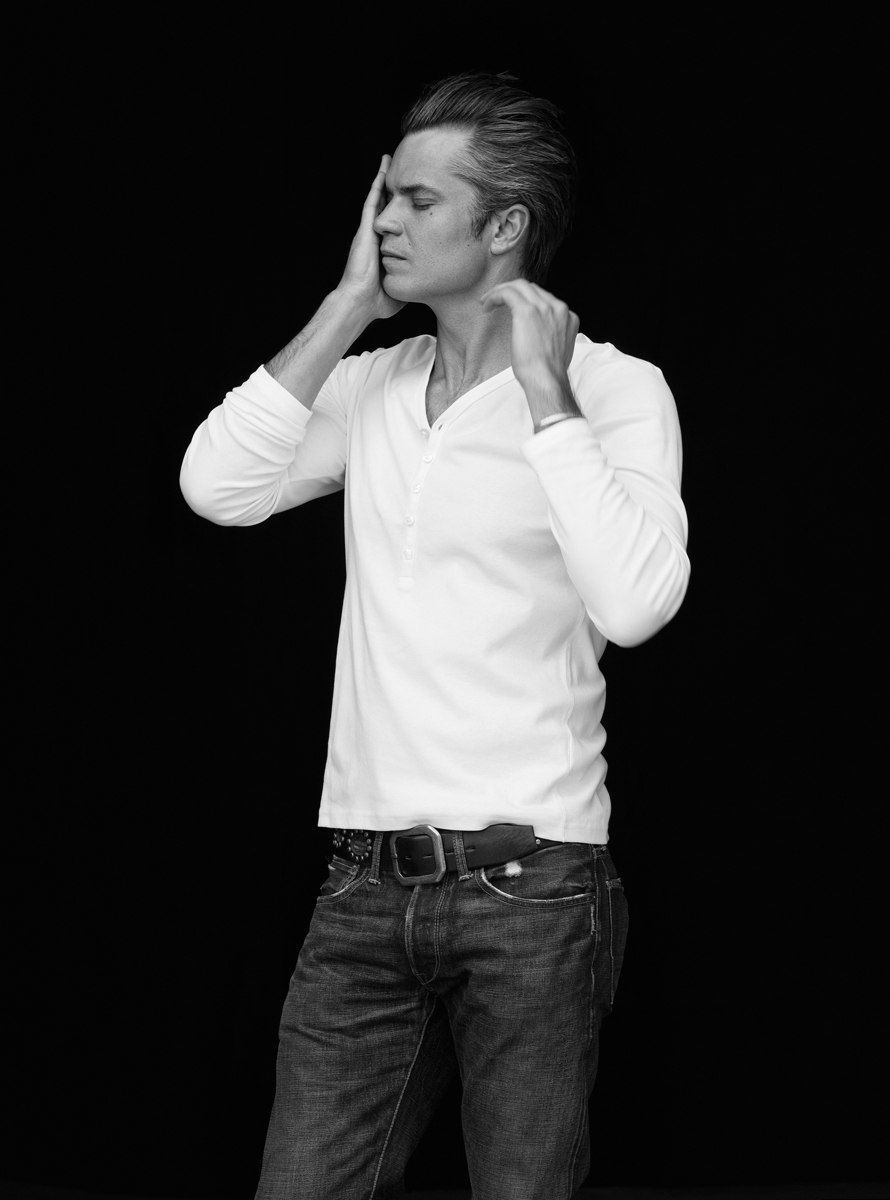
Imperfection and flaws are beautiful no matter how strange or dysfunctional they may be. We all strive for perfection, but it is an unattainable, elusive dream . OK, unless you are Timothy Olyphant! Hubba, friggin hubba. 

390_1timothy_olyphant_2

But I digress….

We all have things we would like to change about ourselves. Learning to accept that we are perfectly imperfect is the key to peace of mind and giving our mirrors a much needed reprieve.  Let’s own our flaws and make them fabulous. Idiosyncrasies should be embraced. How boring life would be without them?

We women especially put so much effort, into our hair, makeup and dress, setting such a high standard by comparing ourselves to others when we should just learn to love ourselves for who we are, flaws and all. Those flaws are what make us uniquely us. Let’s learn to be confident in our insecurities. Our fears do not define our worth, nor naysayers out to cast their stones. Let’s declare our independence from self doubt.  Remember, under all those gorgeous dresses, lovely hats, and winning smile, even Kate Middleton probably has some really quirky qualities about her, like drinking milk straight from the cartoon, or something deranged like that.


Image