Sublime Ends by Tosha Michelle


Sublime Ends

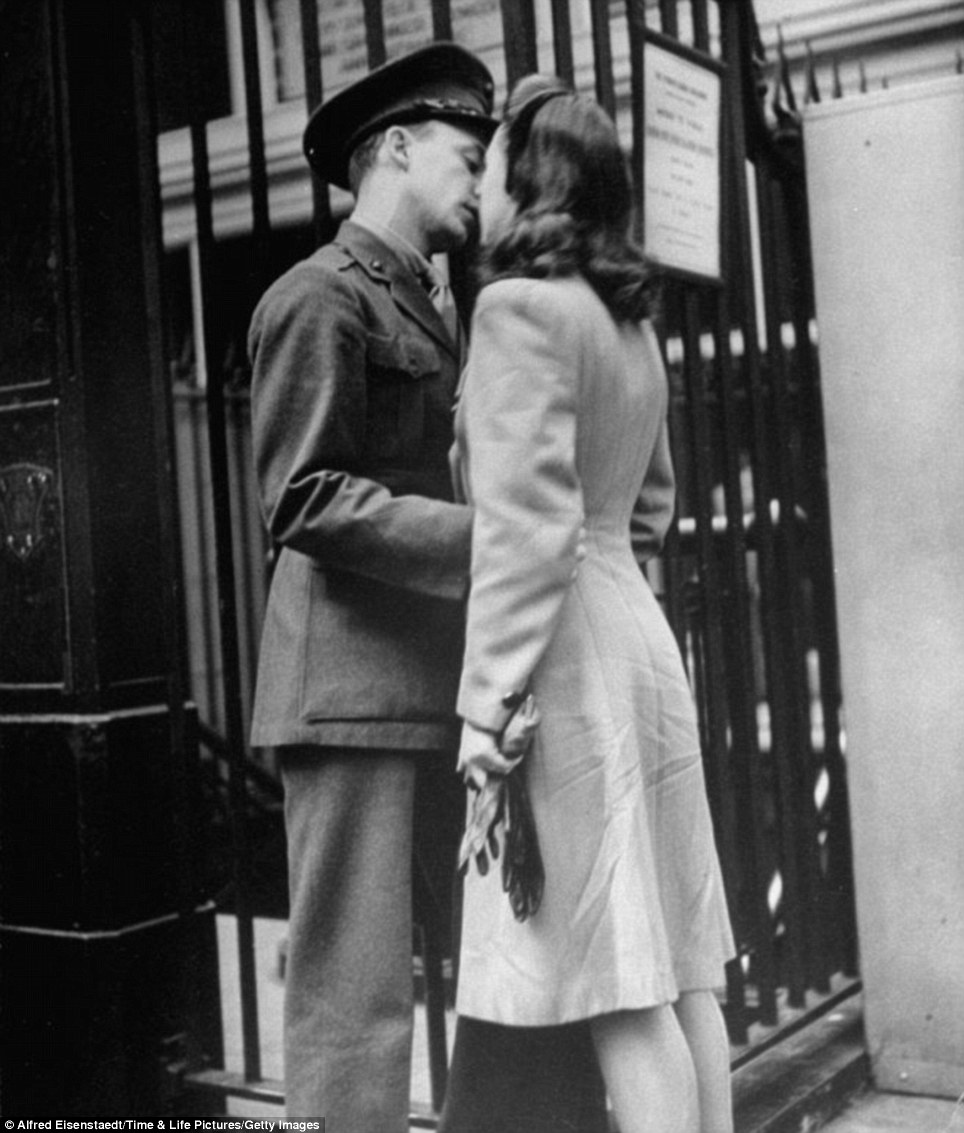
Remember at the station, waiting

On the train, on that sultry summer day?

We stood lost in an embrace, breathing in

each other that way. that awful, terrible,

perfect mad and delicious way that took us

to the shrouded place.

Remember at the station that day, waiting

on the train, as the wind hummed a lovers tune?

She sang of sublime ends, from supple beginnings.

the alluring medley of serenity in a war of rhyme

on the sharp bloody edge of Neverland and Narnia,

the peaceful enchanting interlude of rage & myth.

Remember at the station, that day, as

the train churned closer and we cussed goodbye

His steam a prelude to our eternal kiss, the sun

soaked, never ending fuel of light, of love, of

heat. Basking and bathing,

merged and emerged and submerged,

Dancing and swaying in time

with golden chariot and the huntress.

Remember at the station that day, as

the train tugged away, on a endless track?

We gazed as it came — as it came — as it went

through the crossroads. We did not know,

our own separate, distant destinations,. Our own

rail-less wild paths cut into unimagined mountainsides

You to the west, me to the east.

Remember the station that day as

the train, conducted our last kiss?

That gaping wound where our lips met. Where

we learned cruel fate is hot love and all love is

the calamity of UN-armored battle. We all go under

wrong or right. Each of us blankets miles and the ground

is nothing but a shifting litter with irascible iridescent hope

and hurt-dulled dreams, unfulfilled plans and schemes.

Remember the station that day, waiting

in twilight until we forgot and traveled on, and on

alone, with only prayers of new Twilight to set

in stony slumber with hard solace of old loves loss

then found again.

-Tosha Michelle

article-2279835-179CA760000005DC-292_964x1133

Mark Kingwell-The People’s Philosopher

One of my favorite contemporary philosophers is the University of Toronto professor, author, essayist, and critic Mark Kingwell. He apparently has quite the following in Canada, but we Americans haven’t caught on yet. I discovered his work by accident last year while doing research for an interview with New York Times bestselling author Sylvain Reynard. Reynard who writes under a pen name, is an anonymous Canadian author who is shrouded in mystery. If you’re curious about him, click here.http://http://www.sylvainreynard.com/ He’s a brilliant guy, kind to a flaw, and his proses are effortless. No one aside from Jesus does redemption better.

But I digress. Kingwell’s name came up an article on Reynard. There was speculation that perhaps Kingwell and Reynard were one in the same. Having read both their works, I don’t see it. Their literary voices are vastly different. Reynard seemingly is a strong man of faith. Hope and redemption are prominent themes in his books. Kingwell, from all accounts, is a  atheist. He refers to himself as a rehabilitated Catholic. There are other glaring differences, but we’ll save those for another time.

Kingwell has written twelve books. You can see a list of his work here.http://http://www.philosophy.utoronto.ca/directory/mark-kingwell/ Today I want to focus on two of my favorites. A Civil Tongue (1995) and In Pursuit of Happiness: Better Living from Plato to Prozac (2000).  In A Civil Tongue, he takes on political discourse and culture. He believes social justice can be achieved through an open and honest dialogue. He refers to this as “the talking cure.” He is a proponent of tolerance, reason and civility — how very Canadian of him. In a time when political discord is out of control, his ideas are refreshing. Imagine a world where we actually discuss our political views in a rational, sane way, where we offered up ways to make a difference, where the blame games were nonexistent, and we listen to the other side. Imagine if we not only listened but showed respect for others’ point of view. If we could change political discourse, we could change the world.

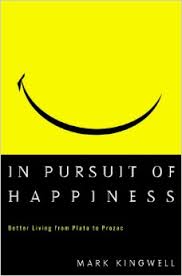
In Pursuit of Happiness: Better Living from Plato to Prozac (2000) explores the nature of happiness and human nature in an engaging and entertaining way. Pop culture references are found throughout — everything from The Simpsons to Pepperidge Farm goldfishes. Naturally the works of some of the greats in philosophy play a prominent role. Spoiler alert: Aristotle plays a leading role in the book. Kingwell is a fan. He also takes us into the New Age movement with a hilarious anecdote of his time at a happiness camp. He tried Prozac just to see what all the fuss was about.

Kingwell asserts that happiness isn’t a feeling. Happiness is not about “feeling” good all the time. “Sometimes good enough is enough.” Reflection and introspection about one’s life are crucial to peace of mind.
It is not enough to just be in the world; one must also feel connected to humanity and the collective good. This can be an arduous task in our modern society in which we are inundated with information. This constant stream of noise that can leave us feeling out of the loop Kingwell refers to as “upgrade anxiety” –the feeling that we have to catch up. This feeling can zap us of our energy and overwhelm us.

Paradoxically, no man is an island. Much emphasis is placed on intimate relationships as being fundamental to happiness, yet solitude has sparked some of the most creative minds in history. Kingwell also states the seemingly obvious, that material goods can’t buy happiness. Happiness is not about getting everything we want. In fact, having all of our heart’s desires can lead to unhappiness. It is in the striving that we find meaning.

A Civil Tongue (1995) and In Pursuit of Happiness: Better Living from Plato to Prozac (2000), are books everyone should read. Kingwell’s writing is flawless without being pretentious or preachy. His wit is a thing of wonder. He’s truly the “every man and woman’s philosopher.” He’s hip, snarky and smart. Who needs happiness camp or Prozac when you have a Kingwell book?

index

The Promise of Pixie Dust

Being sensitive and in tune with the world can be very painful. There’s so much suffering. It’s hard not to drown in sorrow, in both our own and others. However, the only way to be is to feel, to give, to love. The challenge is not in the feeling. No, the test, is learning how to navigate the highs and lows of life’s tide, to understand, not only our frailties, but the frailties of others; to embrace the pain, but never lose sight of hope and the healing powers of love. #balance

Wearing our hearts on our sleeves, is dangerous. We run the risk of having them knocked off and broken, but I’d rather take that chance than keep my heart closed off from the world. I just want to feel, live and BE (and eat chocolate, hang out with Jon Stewart and listen to Justin Bieber tunes while solving math problem) Okay, well, maybe not those last two.

“I can’t help it,
I love the broken ones,
The ones who
Need the most patching up.
The ones who
Never been loved,
Never been loved,
Never been loved enough.
Maybe I see a part of me in them.
The missing piece always trying to fit in.
The shattered heart
Hungry for a home.
No, you’re not alone.
I love the broken ones.”

Falling Slowly

William Shakespeare

“If music be the food of love, play on,
Give me excess of it; that surfeiting,
The appetite may sicken, and so die.”
William Shakespeare, Twelfth Night

Plato

“Music gives a soul to the universe, wings to the mind, flight to the imagination
and life to everything.”
Plato

Maya Angelou

“Music was my refuge. I could crawl into the space between the notes and curl my back to loneliness.”
Maya Angelou

Falling Slowly

-Glen Hansard & Marketa Irglova

Lyrics

I don’t know you
But I want you
All the more for that
Words fall through me
And always fool me
And I can’t react
And games that never amount
To more than they’re meant
Will play themselves out

Take this sinking boat and point it home
We’ve still got time
Raise your hopeful voice you have a choice
You’ve made it now

Falling slowly, eyes that know me
And I can’t go back
Moods that take me and erase me
And I’m painted black
You have suffered enough
And warred with yourself
It’s time that you won

Take this sinking boat and point it home
We’ve still got time
Raise your hopeful voice you had a choice
You’ve made it now

Take this sinking boat and point it home
We’ve still got time
Raise your hopeful voice you had a choice
You’ve made it now
Falling slowly sing your melody
I’ll sing along

Life Lessons as Told by a Reformed Southern Belle

1. Be comfortable in your skin. Live fearlessly. Know what you want. Embrace your passions

2. Be an original. Remember there is nobody else like you. Never let anyone else define your worth. Define yourself!. Write your script. Make it a masterpiece.

3. Every human life has value. We’re all equal. When the rights of one are violated, so are the rights of all. Be a voice for love and humanity Do more. Expect more. Be more.

4. Worrying and obsessing over a problem is a waste. Use that time to work on fixing the issues and brainstorming solutions. In between, perhaps, eat a scoop of rocky road or have a good workout session with a punching bag .Note, the punching bag should not be someone’s face:)

5. Having hopes and dreams is wonderful. However, making those hopes and dreams a reality through hard work and determination is the stuff of which dreams are made.

6. Be kind.

7. A world without love is like a book without words, a box without chocolate, hope without faith. Empty.

8. “This too shall pass” See. This list is just about over.

9. Perhaps, we shouldn’t be offended by song lyrics, or a piece of art. The world would be a far better place if we were more offended by poverty, war, greed, social injustices.

10. Every day is a new day and a chance to begin again, to love, the ones you adore, to count your blessings,, to dance around the kitchen barefoot with the music blaring, to make up silly songs about your rock star cat, to eat another piece of chocolate, to read an amazing piece of literature, and to realizes life is beautifully complex, but simple too.

10408981_919808628035080_3844590866325130173_n

It’s Time to Rise by Tosha Michelle

by Tosha Michelle

Sunshine paints the canvas of my mind.
Blinding me to heartache,
Bleaching away decay,
Shadows fade away.
Grief passes on to where it came.
Vivid shades of orange and blues.
Replace the bleak gray hues.
Basking in the light of love,
Dinning with cheery trees,
I live again.

Cherry-blossom-in-japan

The Zeitgeist consumes us as we consume the Zeitgeist

Written eons ago for a grad class..The assignment…go to the mall..observe…write on the “Malling of America”

As I stand observing the myriad of mannequins robotically moving through the mall I can see the “Malling of America,” according to Kowinski, being choreographed. The mesmerizing mosaic visions and Mall-binding merchandising of science fiction mention in the article are paraphernalia are animated in my mind.  The Mall mesmerizes me.  I can see how we all as consumers are consumed, as Kowinski argues, by the ‘fortress of entertainment that is the mall.”

How can I take a critical step back from the theatre of consumerism? Is it really possible? .Starbucks is calling me and look, Gap is having a sale, and wait I really need a new handbag.. Kowinski explains that the mall has everything and from what I can tell it does.  How can I escape from everything and write from an academic perspective without being consumed?

It seems though that humankind has been searching for everything forever and so if the mall gives  to us  zombie shoppers a sense of “everything” then  maybe the mall does becomes the second opinion of the masses or the second garden of Eden. How can I critically escape from Paradise without being lost or taking a bite of the forbidden fruit, or at least purchasing those sweet Jimmy Choo shoes.

I have no doubt that I can be consumed by consuming as I watch the night of the living dead play out before me. As I watch the unfolding chaos I find a comforting hypnotic way of being and the bewitching power of consumerism casts its spell over me. I struggle to focus and become again a critical observer.  Maybe the mall is a form of escapism.

Rothstein seems to argue that escape from anywhere is not possible as we have nothing to escape from because in a post modern environment we are connected to nothing. Rothstein argues that our trends come and go so fast that there is nothing we can stick to and that there is nothing traditional to shape or guide our lives. In this sense as a consumer I am become just a random shape shifter that does not remember what it was, what I was last consumed by or what it will be that consumes me next.

As I stand back and observe I can’t help but feel that as consumers we are consumed, simultaneously, by our history and by our future and mall illuminates every dimension of whom we were and who we are. The mall identifies to the critical observer that we are constantly consumed by change; changes from both the past and the presence. The Zeitgeist consumes us as we consume the Zeitgeist  T S Elliot’s presence of the past is perpetually swirling around our minds as we are consumed within the fortress of entertainment.

“Time present and time past
Are both perhaps present in time future,
And time future contained in time past.
If all time is eternally present”

index

Elemental by Tosha Michellle

The rip current consumes me.

Dragging me under in a rage,

I struggle against the tide.

Battling the demons of a water drenched mind.

Caught in a vortex of time,

Sun and dry land mock me.

I refuse to be destroyed by the elements.

My arms reach out to the trees.

Their branches sway toward me

But it’s not enough.

In desperation I turn to the earth.

The substance of life,

Hatred and failure taunt me.

With bloody hands and bruise knuckles.

I dig through a wasteland of hopelessness.

Wondering why God has forsaken me.

As the ground beneath continues to break,

I’m free falling into the labyrinth of chaos,

And underworld of isolation,

Night falls.

I lift my head to cry out.

Suddenly overcome by the beauty and magnitude of the stars.

I’m consumed by the will to live and be…

The struggle only amplifies my resolve.

Solace and hope are elemental.

An alive in me.

nations-symbol-avatar-the-last-airbender-wallpapers-1280x1024

The Escape of Malcolm Poe by Allison Burnett (Book review)

It had been ages since a novel kept me up all night, glued to the pages, marveling at a witty turn of phrase. Reading The Escape of Malcolm Poe s akin to devouring a spicy gourmet feast of a meal, enticingly good but surprisingly acerbic Allison Burnett paints a colorful yet dark picture of what it means to turn 50. Satirical to his core, Burnett is the God of smartasses and, paradoxically, the king of tender and lyrical prose. He brandishes a sword in one hand at each introduction to a new character while carrying roses in the other. At first you find the protagonist to be an arrogant, self-absorbed little twit, but by the end you discover a tender heart beating wildly under a guise of burlesque. Malcolm Poe is as endearing as he is infuriating. This novel is a visceral lesson in the drudgery, angst and the harrowing emotional transition that often comes with mid-life, a comedy and a tragedy, a book in which Burnett crafted a portrait so real that I sometime forgot I was reading a work of fiction. The Escape of Malcolm Poe is an experiment in literary innovation, flawless prose and delicious angst.

index