
Listen to Beautiful Disaster( Final -music and vocals by Tosha Michelle 2020 #np on #SoundCloud
http://https://soundcloud.com/tosha-michelle-woody/beautiful-disaster-final-music-and-vocals
CAPTAIN SCARLET
“Each friend represents a world in us, a world possibly not born until they arrive, and it is only by this meeting that a new world is born.”
― Anaïs Nin, The Diary of Anaïs Nin, Vol. 1: 1931-193
I wrote the poem below for my mentor and dear friend Colin Smith. He had just turned fifty the time. I wanted to honor this milestone in some way. You see Colin has changed my world for the better. His guidance and support have been invaluable. He has taught me to see the sublime in the ridiculous, to slow down, to breathe, to be at peace with the world. (The world is easy; it’s me, I still struggle with). Mr. Lovely has been instrumental in awakening my rebel spirit, a spirit that no longer sits meekly and quietly in the background, paralyzed by fear and insecurities. I have found my voice and purpose in life. .We are not meant to be stagnant. We are meant to move, to be, and to give back. We can change the world for the better (Tosha 2016. Rock the vote).. I’ve grown and blossomed so much through my interactions with this soulful Brit. Colin will always have my undying gratitude and affection. He’s a bit of a paradox, a punk rocker and an academic Ph.D. in one hand, guitar in the other, Professor and hellion. This poem attempts to chronicle his journey it’s not my best bit of poetry. I warned you. It may not be a work of art, but it was a labor of love.
Note- the quoted lines are lyrics from Colin’s songs.

CAPTAIN SCARLET
ByTosha Michelle
I
“Every since I was a child all my dreams been running wild”
A baby is born with the heart of a warrior.
A restless spirit, a soul full of magic
In need of a place to call his own.
Into his life walks a beautiful woman.
Singing to him her sweet motherly song.
He will be her son now, and she will be his protection and hope.
These are the days of security and peace.
A blessed refuge and reprieve, but alas not meant to be.
II
“Hate is like a battle, love is like a war”
A little boy grows feeling lost and alone.
Clinging to his mother, she alone is his home.
Escaping from his father who is militant and mean,
Berated and bullied it’s always a scene.
He loses himself in rockets and dreams.
These are the days of fear and survival,
Where contempt and abuse are his arch rivals.
III
“My adolescent dreams are nightmares in the streams.”
A teenager he becomes, defiance his mantra,
He’s out on the streets, looking for peace.
Drugs and needles he seeks. Hedonism and Dionysus he meets.
A life on the brink Chaos and havoc he reaps.
These are the days of excess and rebellion
A manic season of an outlaw and hellion.
IV
“We’re the kids from the block we know how to rock.”
Adulthood finds him a punk rocker with the band.
Girls and guitars, he’s pissing on czars.
His future looks grand. A rebel is taking a stand.
JJ, The Cardinal, -The Blood is the plan.
These are the days of desires and extremes,
Fighting the establishment and rocking sweet, sultry things.
V
“Loving you religiously is doing in my brain.”
A man full grown now at 25 he’s half-way to today.
The girl of his dreams, a bonnie lass is she,
He takes as his bride and a life of passion they lead.
In a few years, a daughter comes along.
Filling her daddy’s heart with song
These are the days of stability and chaos,
Anguish and bliss, and love not without risks.
VI
” I don’t want fortune. I don’t want fame. I want a piece of history.”
A time of changes comes on strong with 30’s drumbeat marching on.
His mind begins yearning as he develops a hunger for learning,
His thoughts, they are a turning, his soul burning.
Off to college, he goes. The seeds of knowledge sown.
These are the days of highs and lows,
Of books and enlightenment and he grows.
VII
“The bouquet of insanity left me a wreck, but I won’t forget.”
The 40”s find him on his own; his family gone.
Somehow, somewhere, someway it all went wrong,
Some things in life are not meant to be.
Sorrow is all he sees, but time moves on.
Through adversity, he finds his strength.
The depth of his spirit, humanity is his link.
Finding his Magna Charta, he realized his purpose.
Justice and liberty become his new song,
A magnum opus for us all.
These are the days of devotion and emotions,
His soul for humanity is causing a commotion.
VIII
“The road less traveled, it’s the one I’m own”
At 50 now what will be will be.
He has miles to go before he sleeps; He cannot rest life is still a test,
But his future is anything but bleak, His spirit far from weak.
Riding out the highs and lows, Tempering the desires and extremes,
Ordering security and chaos, Challenging the unchallengeable dream.
Understanding from experience, he fights the true outlaws and hellions
Humanity his devotion.. Lost in emotions
These will be the days of Renewal and Survival. Rebirth and Revival
A rebel causing a commotion, a life in full motion.

Midnight in the Garden of My Mind. (someone get the weed whacker)
Random thought of the day- If Lady Gaga and The Goo Dolls went on the road together; would they call it the Gaga Goo Goo Tour? By the way, why does Gaga live for the bear claws?
But, seriously….
Introspective thought of the day.- I have come to realizes that; I’ll always be a square peg, just trying to fit in, one foot in this world, the other, God knows where. Hopefully not in Crocs. UGH! Although, happiness is within and surrounds me, there will always be an undertone of sadness and melancholy that resides and resonant to my core. I welcome these emotions with open arms because I am a masochist. I also have a lady boner for that old sod, Heathcliff (the moors, the angst, etc) Did I just type lady boner?
In addition to being maudlin, I am a restless spirit, a spirit who has pieces and shards of interest splayed out in every possible creative direction. But to each its ultimate standard of expertise I can’t seem to reach fully.. Sometimes, I feel like my heart is flying in over my head, bouncing off the walls, the ceilings, yet confined within a certain room. Striving to break free and soar.
I believe I can fly.
Still trying to find my wings.
While I look, grab a pacifier and blankie. Give a listen.

Dear Men (this one’s for you)
Dear Men,
It’s been awhile since I wrote. In my last letter, I praised you, criticized you, and gave you a few pointers. This note will be no different. See the list that follows.
Tips and dips. You’re welcome.
1. Love us for our hearts and minds, and we’ll rock you with our bodies.
2. Tears are not a sign of weakness. It’s OK to be sensitive (unless you’re crying because you have nothing to wear, or you missed a real housewives episode)
3. There are two places tighty whities belong, on babies, or in the trash.
4. The vacuum cleaner and mop will not bite you. Go ahead, try them on for size. I dare you.
5. Sometimes all we need to hear is “No, honey, let me do it.”
6. Cologne is sexy, but no need to bathe in it.
7. A kiss on the hand at the right time can be quite lovely, at the wrong time, equally as creepy.
8. By all means be the man in the relationship when it comes to killing bugs, or opening jars. We don’t mind.
9. However, never tell us what to do. EVER!
10. We want to be your muses but not in a sleazy photographer kind of way. We long to bring out your inner Shakespeare, not Larry Flynt
11. Withhold nothing. We need to know where all the carbon go, and why prime numbers remain a mystery. I’m looking at you, Riemann hypothesis. Why is it all so weird? Oh and everyone you have ever dated, and what you had for lunch, and how your day was, and what your brother said on the phone. Etc.
12. Your mother was right, manners matter. Prove to us chivalry is not dead.
13. Please don’t tell us to calm down. You calm down!
14. I mentioned this last time but felt the need to reiterate, no, we do not want to see a picture of the little engine that could.
15. Just because your friends might find us appealing, doesn’t mean we want to to be with them. (unless your friends are Timothy Olyphant or Jon Stewart)
16. Please talk about your feelings. We want to know what’s going on in those heads of yours. However, we don’t have to have a come to Jesus meeting or an Oprah moment.
17. Douchebaggerty is never a winning look. Wear compassion and humanity instead.
18. There’s nothing hotter than a man with tools, unless, it’s a man with a book.
19. We like wearing your old college sweatshirt or sleeping in your t-shirt. Prepare to share. It makes us feel close to you.
20. All we need is affection, attention, love, chocolate and a guy with a big…………………………………………………………….
brain.
Until, next time gents,
Fondly,
T.
PS. This guy is sexy.
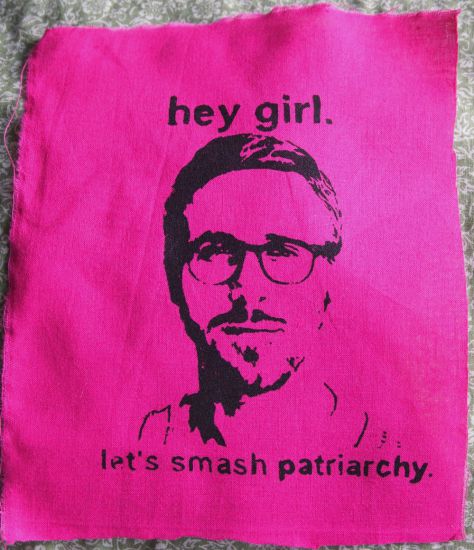
As an aside, I’m obsessed with this song. Yes, I am channeling my inner 16 year old. No judgement, please.
Taylor Swift “Wildest Dreams” lyrics
He said let’s get out of this town
Drive out of the city
Away from the crowds
I thought heaven can’t help me now
Nothing lasts forever
But this is gonna take me down
He’s so tall, and handsome as hell
He’s so bad but he does it so well
I can see the end as it begins my one condition is
Say you’ll remember me
Standing in a nice dress, staring at the sun set babe
Red lips and rosy cheeks
Say you’ll see me again even if it’s just in your wildest dreams
Wildest dreams
I say no one has to know what we do
His hands are in my hair, his clothes are in my room
And his voice is a familiar sound, nothing lasts forever
But this is getting good now
He’s so tall, and handsome as hell
He’s so bad but he does it so well
And when we’ve had our very last kiss
But my last request is
Say you’ll remember me
Standing in a nice dress, staring at the sun set babe
Red lips and rosy cheeks
Say you’ll see me again even if it’s just in your wildest dreams
Wildest dreams
You see me in hindsight
Tangled up with you all night
Burn it down
Some day when you leave me
I bet these memories hunt you around
You see me in hindsight
Tangled up with you all night
Burn it down
Some day when you leave me
I bet these memories follow you around
Say you’ll remember me
Standing in a nice dress, staring at the sun set babe
Red lips and rosy cheeks
Say you’ll see me again even if it’s just pretend
Say you’ll remember me
Standing in a nice dress, staring at the sun set babe
Red lips and rosy cheeks
Say you’ll see me again even if it’s just in your wildest dreams
Wildest dreams
Even if it’s just in your wildest dreams
In your wildest dreams
Twenty Random Questions with Children of the Canyon’s Author-David Kukoff
- If you were Alice, would you rather stay in Wonderland on the other side of the mirror, or come back to the real world to tell your story?
NO BRAINER – COME BACK AND TELL MY STORY. UNLESS THE MAD HATTER SERVED TACOS BY LEO (MY FAVORITE LA TACO TRUCK) AS HIS DAILY TEA SNACK; THEN IT’D BE A TOSS-UP.
- Do you sing in the shower?
YES – AND ON KEY.
- What childhood fear do you still have as an adult?
HEIGHTS.
- An author with whom you would like to have lunch?
TIM O’BRIEN.
- Do you wake up at night to read or write?
ONLY WHEN MY DREAMS ARE BORING ME.
- Do you feel anxious or excited when you start to write?
DEPENDS ON HOW PREPARED I AM. WHEN I’VE ALREADY WORKED OUT IN MY HEAD WHAT I’M GOING TO WRITE, I’M EXCITED TO WRASSLE WITH THE MOTHER TONGUE.
- Does darkness soothe you or frighten you?
NEITHER – IT’S WHERE I LIVE, BABY. THINK WATER :: FISH.
- If you ruled your own country, who would you get to write your national anthem?
JONI MITCHELL.
- What makes you nostalgic?
MY KIDS.
- Does love dry up your creative juices or make them flow faster?
DRIES ‘EM UP. ANYONE WHO SAYS OTHERWISE ISN’T REALLY IN LOVE.
- Do you remember your dreams?
SOMETIMES – SEE ANSWER TO #5.
- What’s your favorite color?
TOO MANY ANSWERS, BUT HERE ARE A FEW SAMPLES: TO WEAR, BLACK. TO DRIVE, GREENISH KHAKI. TO DATE, THE FULL RAINBOW COALITION.
- What’s your favorite season?
ANYTHING THAT’S NOT WINTER.
- Does pressure motivate you?
IF IT COMES IN THE FORM OF A DEADLINE, YES.
- Would you rather live to write or write to live?
I’VE DONE THE LATTER, AND IT MAKES YOU A HELL OF A LOT MORE GRATEFUL FOR THE FORMER. CAN YOU DO BOTH? I’M ON THE VERGE OF PULLING THAT ONE OFF NOW, I THINK.
- What published book do you secretly wish you had written?
WHITE NOISE. AND NOT SECRETLY, EITHER.
- Are you the paranoid type or calm, cool and collected?
NEITHER, REALLY.
- What would qualify as the afternoon of your dreams?
DRIVING MY CONVERTIBLE AROUND ALL MY FAVORITE NEIGHBORHOODS IN LOS ANGELES, ENDING ON THE BEACH.
- Are you more like the sun or the moon?
DESPITE MY GLIB ANSWER TO #7, THE SUN. I’M ACTUALLY A PRETTY UPBEAT PERSON.
- Do you hear voices?
EVERY WRITER SHOULD, AT TIMES. RIGHT?
I’d like to thank David for taking time out of his busy life to participate in this blog post. I do have to wonder why he felt the need to yell at us. (Kidding) Here’s a little more about David and his poignant coming age novel Children of The Canyon.
About David:
“I put every syllable of a novel through the wringer hundreds of times to measure everything from connotation to rhythm.”
“A native Angeleno and graduate of Columbia University and UCLA Film School, David Kukoff has eleven produced film and television credits to his name (including the hit Disney movies “Model Behavior” with Justin Timberlake and Kathie Lee Gifford and “Switching Goals” with the Olsen Twins). Following a spec screenplay sale that made the front page of Variety, he went on to write for every studio and network in Hollywood, publish two books on film and television writing, and be the subject of numerous features in Variety, Entertainment Weekly, The Hollywood Reporter, and KCET’s award-winning “Life And Times Tonight.”
Mr. Kukoff has also taught writing at Northwestern (where he was elected to the university’s Faculty Honor Roll in his first year), UCLA, and NYU, served as a guest editor for UK academic publisher Palgrave MacMillan, and been featured as a guest lecturer at UCLA’s Faculty Lecture Series at Lake Arrowhead.”
Children Of The Canyon
Children of the Canyon tells the story of David, a boy growing up in LA’s fabled Laurel Canyon neighborhood as the 1960s counterculture is coming to an end.
David’s record producer father works with the reclusive former leader of a surf music band on an album that promises to elevate the legacies of both men to immortal status. His distant, peripatetic mother rides the waves of activism and feminism in and out of David’s life. The elusive Topanga, named for the city’s last remaining Eden, whom David meets on the beach the night of his parents’ separation continues to elude his futile attempts to reconnect with her throughout the decade.
Through David’s eyes, we bear witness to the fallout from the California Dream’s malfunction: the ruined families, failed revolutionaries, curdled musical idealism, and, ultimately, the rise of the conservatism that put the country on its present path.

Beauty and the Self Conscious Beast.
Imperfection and flaws are beautiful no matter how strange or dysfunctional they may be. We all strive for perfection, but it is an unattainable, elusive dream. OK, unless you are Timothy Olyphant! Hubba, friggin hubba.
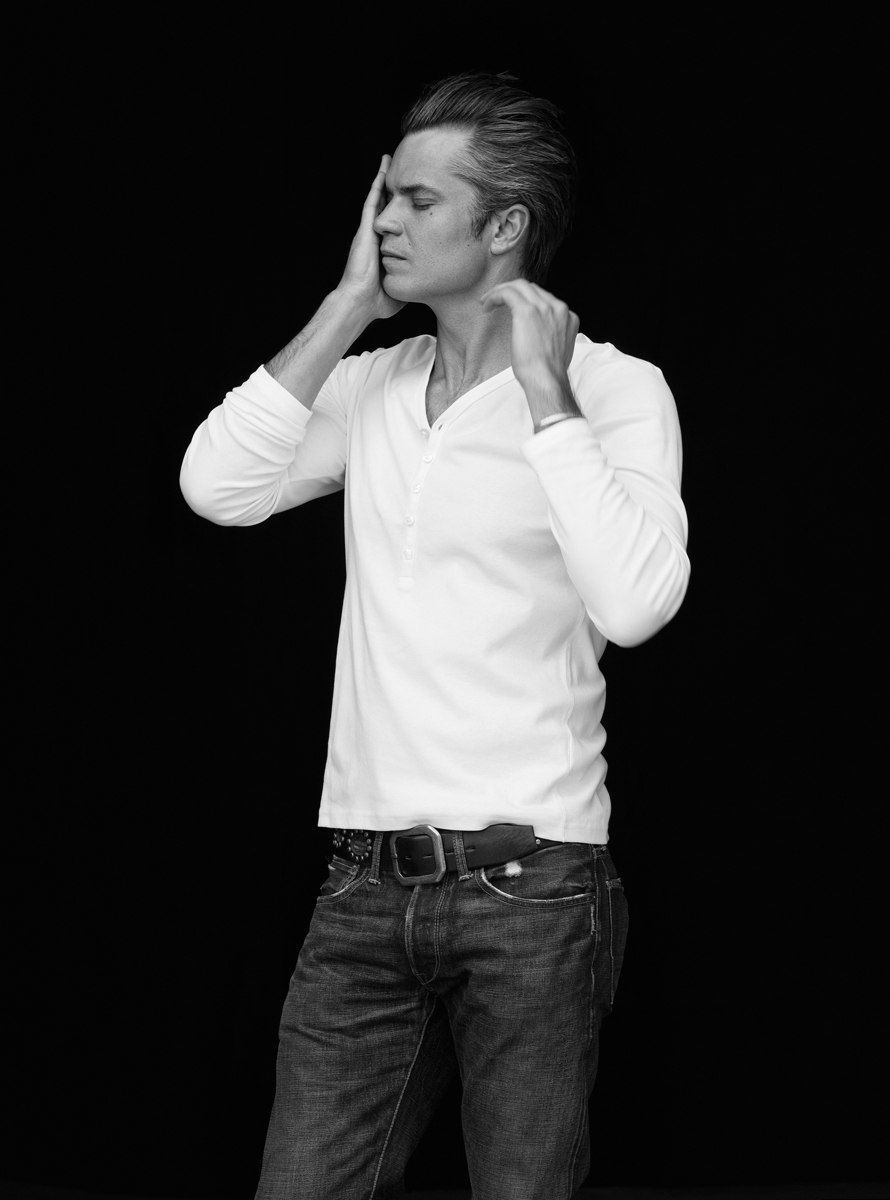
But I digress….
We all have things we would like to change about ourselves. Learning to accept that we are perfectly imperfect is the key to peace of mind and giving our mirrors a much-needed reprieve. Let’s own our flaws and make them fabulous. Idiosyncrasies should be embraced. How boring life would be without them?
We women especially put so much effort, into our hair, makeup and dress, setting such a high standard by comparing ourselves to others when we should just learn to love ourselves for who we are, flaws and all. Those flaws are what make us uniquely us. Let’s learn to be confident in our insecurities. Our fears do not define our worth, nor naysayers out to cast their stones. Let’s declare our independence from self-doubt. Remember, under all those gorgeous dresses, lovely hats, and winning smile, even Kate Middleton probably has a few quirky qualities about her, like drinking milk straight from the cartoon, or something deranged like that.

City Haze-by Tosha Michelle
City Haze
by Tosha Michelle
Dance with me in the city haze,
Through September grooves.
under the beauty of a harvest moon,
in pattern fields of amber.
Colored by a heavenly mist, dust of serenity.
We’ll set the night ablaze.
While the shadows enfold us
as the willow whispers
And the wind sings us a melodic tune.
Our imagination sets the beat.
We’ll find solace and cohesion,
As melancholy drains away
on cracked sidewalks of urban decay.

I Don’t Want to be Just Like You
I Don’t Want to be Just Like You.
By Tosha Michelle.
If we lose our individuality,
We lose what’s make us unique.
I don’t want to be just like you.
I don’t want you to be just like me.
Imagine if we were all the same.
A paradigm of indistinguishability
The world would be innate and banal.
We’ve walk around in a zombiified state,
trapped in our own egalitarian but bromidicdevices.
The world needs diversity.
There’s a rightness and purity in being different.
We’re all family, our mélange makes us beautiful.
Our commonality is our humanity, rooted in love we grow.

Twenty Random Questions with Philosopher Extraordinaire Mark Kingwell.
Mark Kingwell was kind enough to agree to answer twenty random questions, posed by yours truly. If you aren’t familiar with the Professor, please check out his bio at the end of this post. I have an innocent and platonic fascination with his mind. He’s my Glenn Gould. Mark will get that, and so will those of you familiar with his books. If you haven’t read Kingwell’s work, I promise once you do you’ll be just as intrigued. As an aside, Mark will on my podcast La Literati on Jan. 12th. You can find the details at: http://www.blogtalkradio.com/laliteraticarpelibrum We’re excited to speak with him. In the meantime, check out his insightful and humorous answers to total randomness.
1. If you were Alice, would you rather stay in Wonderland on the other side of the mirror, or come back to the real world to share your story?
Well, it’s a psychedelic trip, isn’t it? So I would come back, but I wouldn’t tell anybody about it. And I’d figure out a way to get back there at some point.
2. If you were going to write an article about yourself, what would the headline be?
“Everyone hates a sad professor.” (Yes, I stole that.)
3. If you were a drink, what would you be? Why?
That’s easy, because I once published a book about cocktails and I like to mix them for friends. So I’d say I am a dry gin martini, served straight up, with one of those big olives stuffed with a piece of blue cheese. Cold and clear, then some salt and pungency waiting for the right moment to show itself.
4. What childhood fear do you still have as an adult?
Failure. And since you ask, I’m still not too crazy about wasps. Also frozen hockey pucks to the face.
5. If you could choose just one thing to change about the world, what would it be?
No religious zealotry, thank you.
6. What’s your favorite poem?
John Donne, “The Ecstasy.”
7. Does darkness soothe you or frighten you?
Very soothing stuff, darkness. Except when it isn’t. You know, that noise that doesn’t immediately make sense…
8. If you ruled your own country, who would you get to write your national anthem?
Cole Porter. Or maybe Hal David.
9. What makes you nostalgic?
This will sound weird if you aren’t, like me, an air force brat: seeing any military airplane. They make me think of the bases where I grew up, the funny houses with the same floorplan no matter where you were in the country, the kids you knew for a few months before their fathers got posted somewhere else. Games of Post Office in somebody’s garage. Sandlot baseball. Soundtrack by Creedence Clearwater Revival, Grand Funk Railroad, and Alice Cooper.
10. Clowns., creepy or cool?
You’re not seriously asking that, are you? Creepy of course. Creepy creepy creepy. Also, see Question 7. Bart Simpson had it right: “Can’t sleep. Clowns will eat me.”
11. Do you remember your dreams?
About once a week. They are usually extremely violent, David Cronenberg or Quentin Tarantino violent. I have no idea why.
12. What’s your favorite song?
That’s easy: “Smoke Gets In Your Eyes,” any version, but maybe especially the Platters (1958) and Keith Jarrett (2009). I’m going to cheat and add that my favourite album of all time is Glenn Gould’s “A Consort of Musick Bye William Byrde And Orlando Gibbons” (1984); this just edges out Keith Jarrett’s sublime “Köln Concert” (1975) and “Armed Forces” by Elvis Costello and the Attractions (1979).
13. What’s your favorite season?
Autumn. Especially here in Ontario, where everything looks better when the leaves begin to change colour. Also: playoff baseball.
14. Does pressure motivate you?
Absolutely. The self-applied kind is the best, though.
15. To what extent do you shape your own destiny, and how much is down to fate?
I will quote Sarah Connor from the Terminator franchise: “There is no fate but what we make.”
16. What published book do you secretly wish you had written?
A Supposedly Fun Thing I’ll Never Do Again. Also, The Republic.
17. Are you the paranoid type or calm, cool and collected?
I’m not paranoid, but I usually disguise my intense misanthropy under a facade of easygoing amiability. Does that answer the question? Maybe not… Might make sense of Question 11, though.
18. What would qualify as the afternoon of your dreams?
Well, there has to be sex with my sweetie in there somewhere, plus music, and art, and then cocktails at some point before dinner. Also a baseball game or a walk in the woods or some fly fishing. Hmm – I guess it matters whether I’m alone or not. Am I alone? Oh no…
19. Are you more like fire or the earth?
Can’t I be both? And also wind? I always wanted to play in the horn section on “Got To Get You Into My Life.”
20. Do you hear voices?
Just my own, incessant and various, about deadlines and ideas, quotations and turns of phrase, things to say and things I wish I’d said. Wouldn’t want it otherwise.
Bonus question:
What are you currently working on?
A new collection of essays about democracy and culture, to be published next year
About Mark kingwell:
Mark Kingwell is a Professor of Philosophy at the University of Toronto and a contributing editor of Harper’s Magazine in New York. He is the author or co-author of seventeen books of political, cultural and aesthetic theory, including the bestsellers Better Living (1998), The World We Want (2000), Concrete Reveries (2008), and Glenn Gould (2009). His articles on politics, architecture and art have appeared in many academic journals, including the Journal of Philosophy and the Harvard Design Magazine, and in more than 40 mainstream publications, among them Harper’s, the New York Times, the New York Times Magazine, the New York Post, the Wall Street Journal, the Guardian, Utne Reader, BookForum, the Toronto Star, and Queen’s Quarterly; he is also a former columnist for Adbusters, the National Post, and the Globe and Mail.
Mr. Kingwell has lectured extensively in Canada, the United States, Europe, the Middle East, and Australia on philosophical subjects and had held visiting posts at Cambridge University, the University of California at Berkeley, and at the City University of New York, where he was the Weissman Distinguished Visiting Professor of Humanities in 2002. Mr. Kingwell is the recipient of the Spitz Prize in political theory, National Magazine Awards for both essays and columns, the Outstanding Teaching Award and President’s Teaching Award at the University of Toronto, a research fellowship at the Jackman Humanities Institute, and in 2000 was awarded an honorary DFA from the Nova Scotia College of Art & Design for contributions to theory and criticism. His most recent book is a collection of political essays, Unruly Voices (2012); he has also recently published two illustrated pamphlets, Frank’s Motel (2013) and Democracy’s Gift (2014).

Friedrich A Kittler: Essays: Literature Media and Systems: A Review by Tosha Michelle
Friedrich Kittler’s work describes a ‘post modern Tower of Babel’ which is paradoxically,
organized, or unleashed, by fractal theory which demonstrates that we, or society, do not
control technology but in fact technology totally controls and maneuvers us.
Kittler uses an iconic movement, or moment, from popular culture to define what he means
when he quotes Mick Jagger’s’ words: we can’t always get what we want but we get what we need. Meaning that the Frankenstein machine like monster that society has become gives us only what we need to exist.
Kittler is more or less saying that a fractal-army of techno-vampires has sucked the life
blood out of the human spirit and now that we, society, have been bitten there is no going
back: or undoing the processing of the fracturnally evolving system.
Kittler argues that the only problem that this Transylvanian system of technology has in completing it conquering of the human spirit totally is in how this system is to hide from us, or what is left of us, the fact that we the subjects have lost, or are losing, our identity.
We might argue that Herbert Marcue’s One Dimensional Man: 1964: offered humankind the chance of more possibities against the unfreedom of technological systems.
It seems for Kittler, as for Michael Focault, an authentic opportunity for individuals to
escape for humankind from becoming zombified, cyborgs, or vampires who line dance before the throwns of the technological systems is not even a remote possibility. The classic popular cultural movie Night of the Living Dead gives us a vivid and nightmarish aesthetic look at the phenomena of today’s society but we might say that there is a mocking humor in the directors cut.
Perhaps then the block buster, The Matrix is closer to the reality or non-reality that Kittler is arguing. The government originally banned this film for one reason or another?
However, we might argue that the development of fractal philosophy, or fractal theory, has other potential, and possible, and more optimistic ways of taking humankind forward in the 21st Century. Medicine and treatment along side the mapping of genes for instance.
Antonio Gramci said pessimism of the intellect and optimism of the will is the way forward and even though the Frankfurt School seemed full of doom in some of its arguments of objectivity it did offer that people were political and that a great refusal was also possible if we in society took a critical distance and a gave our self the chance to imagine alternatives from other perspectives.
Walter Benjamin’s work without doubt influenced Marshal Berman’s extraordinary book of
hope: All That Is Solid Melts into Air: 1983: which certainly challenges the arguments of the system and fractal totalities of Foucault and Kittler. We might argue then that Gramci’s optimism of the will is a spirited challenge arguing that people in society can change society.
Gramsci said that culture means the exercise of thought, the acquisition of general
ideas, and the habit of connecting causes and effects together. He argued that culture
means thinking well, whatever one thinks, and therefore acting well, in whatever one does:
optimism of the will once more.
When Gramsci wrote the words pessimism of the intellect optimism of the will he wrote it
from inside a prison cell and he wrote it as a message of hope for others. Gramsci argued that we must speak of a new struggle for a new culture which is intuitive to a new way of feeling and seeing reality.
Gramsci’s cultural words of optimism challenged the hegemony of totalities and the grip of
power that systems of totality have on society. Gramsci argued that hegemony was active in all realms of culture and social organization Gramsci’s optimism of the will can be seen as a direct argument against Kittler’s argument that the human spirit is no more.
Gramsci argued that a development of the will, or freedom of the will, was not beyond the individual to achieve.
Stewart Hall’s understanding of political activism, alongside academic theory, as an
essential way forward is hopeful also. For example, the Popular Cultural movement of the
Punk Rock phenomena of the 70s and 80s demonstrated how politics and aesthetics are fundamentally linked together by the relationship between performer and audience. The performer is not beyond the reach of the the person in audience just as those who dwell in the academic ivory tower also have to get their hands dirty.
Kittler offers no hope to a society of free will through popular culture, and just as Foucault does, Kittler turns each and every possibility of a developing universal imagination of Milky Ways, somewhere over the rainbows, and Never Lands into cul de sacs. The magical
spirit of humanity and looking through the looking glass from either way is shaped into a mind bending barbed wire matrix from which there is no escape: or no freedom of thought.
Marshal Berman makes this kind of argument in the introduction of All That Is Solid.
Stewart Hall talks about the potential of global citizenship and the possibility of freedom in a way that is lost under the fixed ideas that there is one space, one globe, one citizenship, and one morality, but that the reality is that otherness is the way forward.
Hall argues that the interconnectivity of popular Friedrich A Kittler: Essays: Literature Media and Systems:and globalization acts as structures of power that creates conflict instead of the possibility a universal vision. Hall’s argument on popular culture is one that demonstrates how the interconnectivity of globalization is used in the dimensions that Kittler argues but Hall argues that such totalization does not prescribe humankind a definitive future under such a pessimistic cloud.
In support of Kittler theory someone quoting Einstein said that God doesn’t play dice with the universe. Einstein also said that those who think that they know what the true is are getting shipwrecked on the laughter of the Gods.
Friedrich A Kittler:
Friedrich A Kittler: Essays: Literature Media and Systems: ISBN 90-5701-071-2
Answers.com: Dictionary: A Dictionary which is a Part of Popular Cultural Phenomena:
Fractal: A geometric pattern that is repeated at ever smaller scales to produce irregular
shapes and surfaces that cannot be represented by classical geometry. Fractals are used
especially in computer modeling of irregular patterns and structures in nature
Antonio Gramsci:
Gramsci, Antonio, Selections from cultural writings. London (Lawrence & Wishart) 1985
Stewerert Hall:
http://www.youtube.com/watch?v=fBfPtRaGZPM
Interview of the sociologist and social thinker Stuart Hall:
by Pnina Werbner.Feb. 01. 2008:
 Everything I Never Told You